Maintenance Agencies and Metadata Providers
All structural metadata in SDMX is owned and maintained by a maintenance
agency (Agency identified by agencyID in the schemas). Similarly, all
reference metadata (i.e., MetadataSets) is owned and maintained by a
metadata provider organisation (MetadataProvider identified by
metadataProviderID in the schemas). It is vital to the integrity of the
structural metadata that there are no conflicts in agencyID and
metadataProviderID. In order to achieve this, SDMX adopts the following
rules:
- Agencies are maintained in an
AgencyScheme(which is a sub class ofOrganisationScheme); Metadata Providers are maintained in aMetadataProviderScheme. - The maintenance agency of the Agency/Metadata Provider Scheme must
also be declared in a (different)
AgencyScheme. - The “top-level” agency is SDMX and this agency scheme is maintained by SDMX.
- Agencies registered in the top-level scheme can themselves maintain
a single
AgencySchemeand a singleMetadataProviderScheme. SDMX is an agency in the SDMXAgencyScheme. Agencies in anyAgencySchemecan themselves maintain a singleAgencySchemeand so on. - The
AgencySchemeandMetadataProvideSchemecannot be versioned and thus have a fixed version set to ‘1.0’. - There can be only one
AgencySchememaintained by any one Agency. It has a fixed Id of ‘AGENCIES’. Similarly, only oneMetadataProvideSchemeis maintained by one Agency and has a fixed id of'METADATA_PROVIDERS'. - The format of the agency identifier is
agencyId.agencyIDetc. The top-level agency in this identification mechanism is the agency registered in the SDMX agency scheme. In other words, SDMX is not a part of the hierarchical ID structure for agencies. SDMX is, itself, a maintenance agency.
This supports a hierarchical structure of agencyID.
An example is shown below.
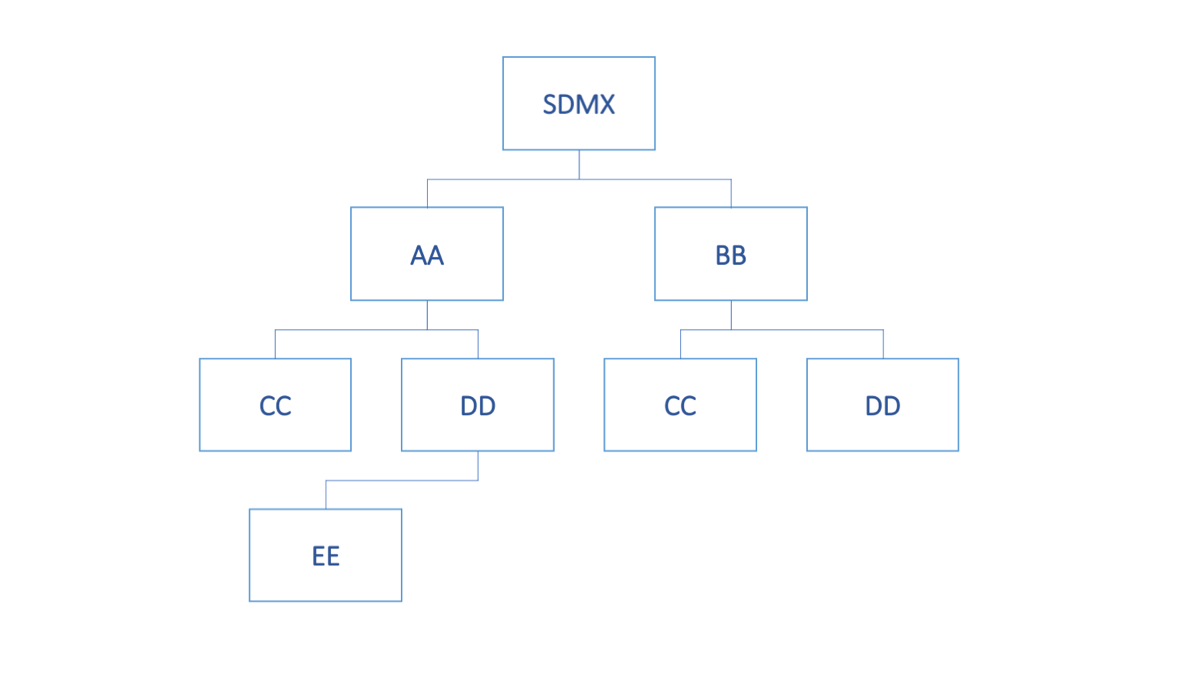
Figure 16. Example of Hierarchic Structure of Agencies
Each agency is identified by its full hierarchy excluding SDMX.
The XML representing this structure is shown below.
<str:AgencySchemes>
  <str:AgencyScheme agencyID="SDMX" id="AGENCIES">
    <com:Name xml:lang="en">Top-level Agency Scheme</com:Name>
    <str:Agency id="AA">
      <com:Name xml:lang="en">AA Name</com:Name>
    </str:Agency>
    <str:Agency id="BB">
      <com:Name xml:lang="en">BB Name</com:Name>
    </str:Agency>
  </str:AgencyScheme>

  <str:AgencyScheme agencyID="AA" id="AGENCIES">
    <com:Name xml:lang="en">AA Agencies</com:Name>
    <str:Agency id="CC">
      <com:Name xml:lang="en">CC Name</com:Name>
    </str:Agency>
    <str:Agency id="DD">
      <com:Name xml:lang="en">DD Name</com:Name>
    </str:Agency>
  </str:AgencyScheme>

  <str:AgencyScheme agencyID="BB" id="AGENCIES">
    <com:Name xml:lang="en">BB Agencies</com:Name>
    <str:Agency id="CC">
      <com:Name xml:lang="en">CC Name</com:Name>
    </str:Agency>
    <str:Agency id="DD">
      <com:Name xml:lang="en">DD Name</com:Name>
    </str:Agency>
  </str:AgencyScheme>

  <str:AgencyScheme agencyID="AA.DD" id="AGENCIES">
    <com:Name xml:lang="en">AA.DD Agencies</com:Name>
    <str:Agency id="EE">
      <com:Name xml:lang="en">EE Name</com:Name>
    </str:Agency>
  </str:AgencyScheme>

</str:AgencySchemes>
Figure 17. Example Agency Schemes Showing a Hierarchy
Examples of Structure definitions that show how Agencies are used, are presented below:
<str:Codelist agencyID="SDMX" id="CL_FREQ" version="1.0.0"
    urn="urn:sdmx:org.sdmx.infomodel.codelist.Codelist=SDMX:CL_FREQ(1.0.0)">
    <com:Name xml:lang="en">Frequency</com:Name>
  </str:Codelist>
  <str:Codelist agencyID="AA" id="CL_FREQ" version="1.0.0"
    urn="urn:sdmx:org.sdmx.infomodel.codelist.Codelist=AA:CL_FREQ(1.0.0)">
    <com:Name xml:lang="en">Frequency</com:Name>
  </str:Codelist>
  <str:Codelist agencyID="AA.CC" id="CL_FREQ" version="1.0.0"
   urn="urn:sdmx:org.sdmx.infomodel.codelist.Codelist=AA.CC:CL_FREQ(1.0.0)">
    <com:Name xml:lang="en">Frequency</com:Name>
  </str:Codelist>
  <str:Codelist agencyID="BB.CC" id="CL_FREQ" version="1.0.0"
   urn="urn:sdmx:org.sdmx.infomodel.codelist.Codelist=BB.CC:CL_FREQ(1.0.0)">
    <com:Name xml:lang="en">Frequency</com:Name>
  </str:Codelist>
Figure 18. Example Showing Use of Agency Identifiers
Each of these maintenance agencies has a Codelist with an identical id
'CL_FREQ'. However, each is uniquely identified by means of the
hierarchic agency structure.